

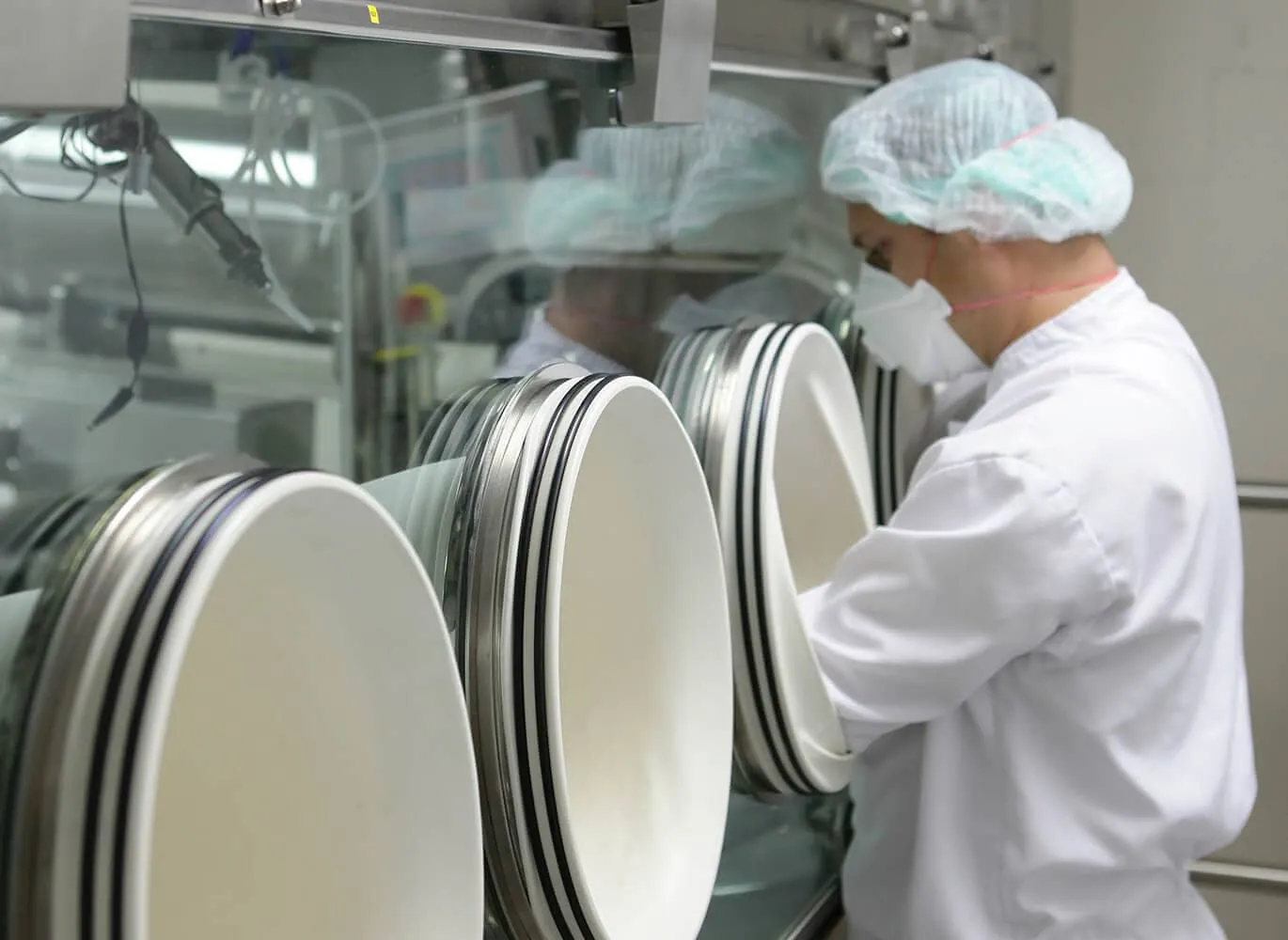
Glove boxes and other controlled-environment systems are designed to maintain specific atmospheric conditions that protect sensitive materials, critical processes, and personnel. Whether the application involves battery research, pharmaceutical manufacturing, semiconductor processing, anaerobic microbiology, or metal additive manufacturing, maintaining proper oxygen levels is essential for performance, safety, and quality.
A controlled environment is a precisely regulated space with a known atmospheric composition. These environments are used when uncontrolled ambient conditions could introduce risk, contamination, variability, or process failure. Oxygen monitoring plays a central role in ensuring that these environments remain stable and effective.
Why Oxygen Monitoring Matters
Oxygen is both a critical safety variable and a highly reactive element. Even small oxygen excursions can affect reactions, damage sensitive materials, compromise sterility, and reduce production yields. Continuous oxygen monitoring verifies that a sealed enclosure is maintaining the intended atmospheric conditions.
Effective oxygen monitoring supports:
- Process integrity and quality control
- Safety and risk prevention
- Regulatory compliance
- Automation and process control
- Early detection of leaks, seal failures, and operator errors
Continuous monitoring provides confidence that controlled environments remain within specified operating parameters. Learn more in Why Oxygen Monitoring Matters in Controlled Environments.
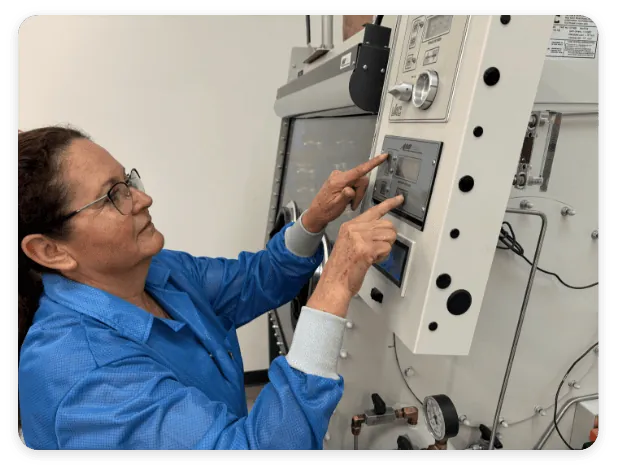
Popular AMI Products for Glove Box Oxygen Monitoring
The following AMI products leverage our proprietary designs and advanced technology to deliver continuous or portable oxygen measurement inside glove boxes, isolators, and related controlled-environment systems.
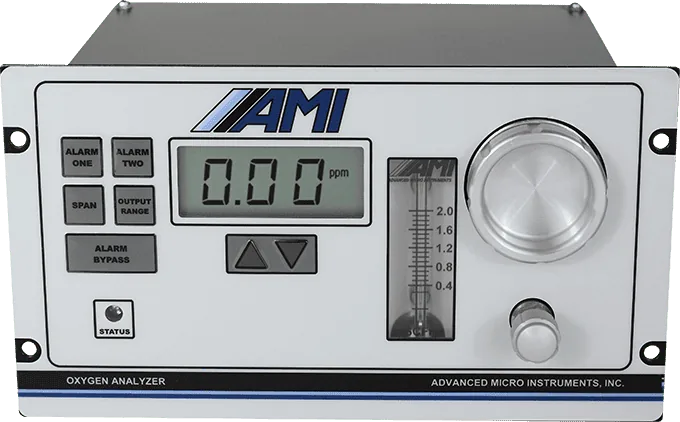
MODEL 2001RS/RSP — Trace Oxygen Monitoring
AMI panel-mount oxygen analyzers provide permanent, continuous monitoring for glove boxes and controlled-environment systems. The Model 2001RS and 2001RSP help organizations maintain the precise ultra-low oxygen concentrations needed to protect sensitive materials, validate experiments, and ensure product quality.
Features
- Continuous oxygen monitoring with highly accurate, quick-response, low-ppm measurement capability.
- Fast response time to small oxygen changes in a controlled environment.
- Sensors engineered specifically for low-oxygen and inert-atmosphere applications.
- Integrated data logging and adjustable alarm relay outputs to warn of oxygen ingress.
- Our proprietary Eliminator Cell Block provides a complete sample system and front-panel sensor access without tools.
Applications
- Inert-atmosphere glove boxes for battery research and manufacturing;
- Semiconductor and electronics processing;
- Pharmaceutical and chemical synthesis;
- Metal additive manufacturing and 3D printing;
- Laboratories monitoring trace oxygen in glove boxes and anaerobic chambers.
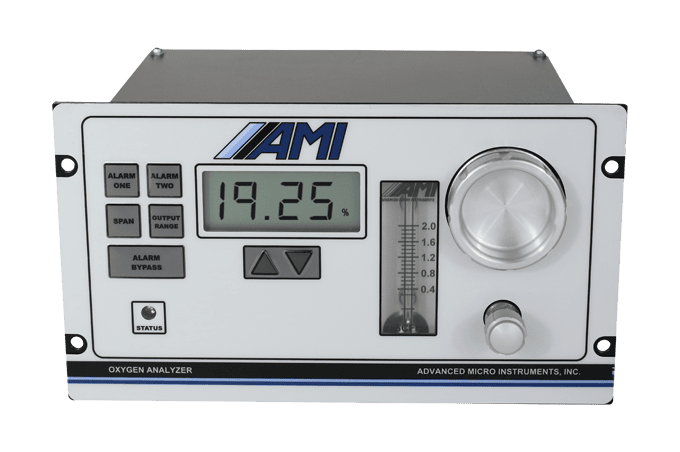
MODEL 201RS/RSP — Percent Oxygen Monitoring
The Model 201RS and 201RSP are advanced percent oxygen analyzers for glove boxes and controlled environments that require continuous percent-level measurement. The compact, panel-mounted design includes AMI’s Eliminator Cell Block and industry-leading percent O2 sensors for accurate, reliable, and extremely fast response times.
Features
- Continuous percent oxygen monitoring in a virtually maintenance-free panel-mount package.
- Fast response to oxygen ingress after glove port entries, airlock cycles, or purge operations.
- Adjustable concentration alarms and analog outputs for system integration.
- Command Center software for calibration details, alarm configuration, and data logging.
Applications
- Glove boxes and isolators that operate at percent oxygen setpoints;
- Controlled-atmosphere process chambers;
- Validation of purge cycles before sensitive work begins.
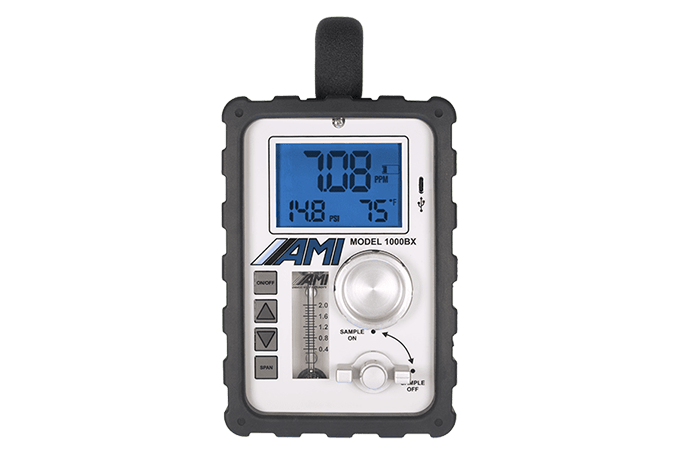
MODEL 1000BX — Portable Oxygen Monitoring
Portable oxygen analyzers deliver the same measurement capabilities with additional flexibility. They are especially valuable in multi-station facilities where one analyzer may be used across multiple glove boxes, isolators, or controlled environments.
Features
- Cost-effective deployment across multiple systems.
- Rapid validation after purging operations.
- Spot-check verification after glove port entries.
- Troubleshooting support with fast, reliable oxygen measurements.
Applications
- Verifying atmospheric conditions before battery manufacturing or pharmaceutical production;
- Checking multiple glove boxes that do not each have a dedicated panel-mount analyzer;
- Confirming readings from installed instrumentation.
Key Benefits of AMI Oxygen Analyzers
AMI oxygen analyzers provide:
- High accuracy for precise environmental control
- Rugged construction for long-term reliability
- Seamless integration with existing systems
- Easy maintenance and operation
The analyzers are designed to support demanding controlled-environment applications where oxygen measurement directly affects process success.
Controlled Environments That Require Oxygen Monitoring
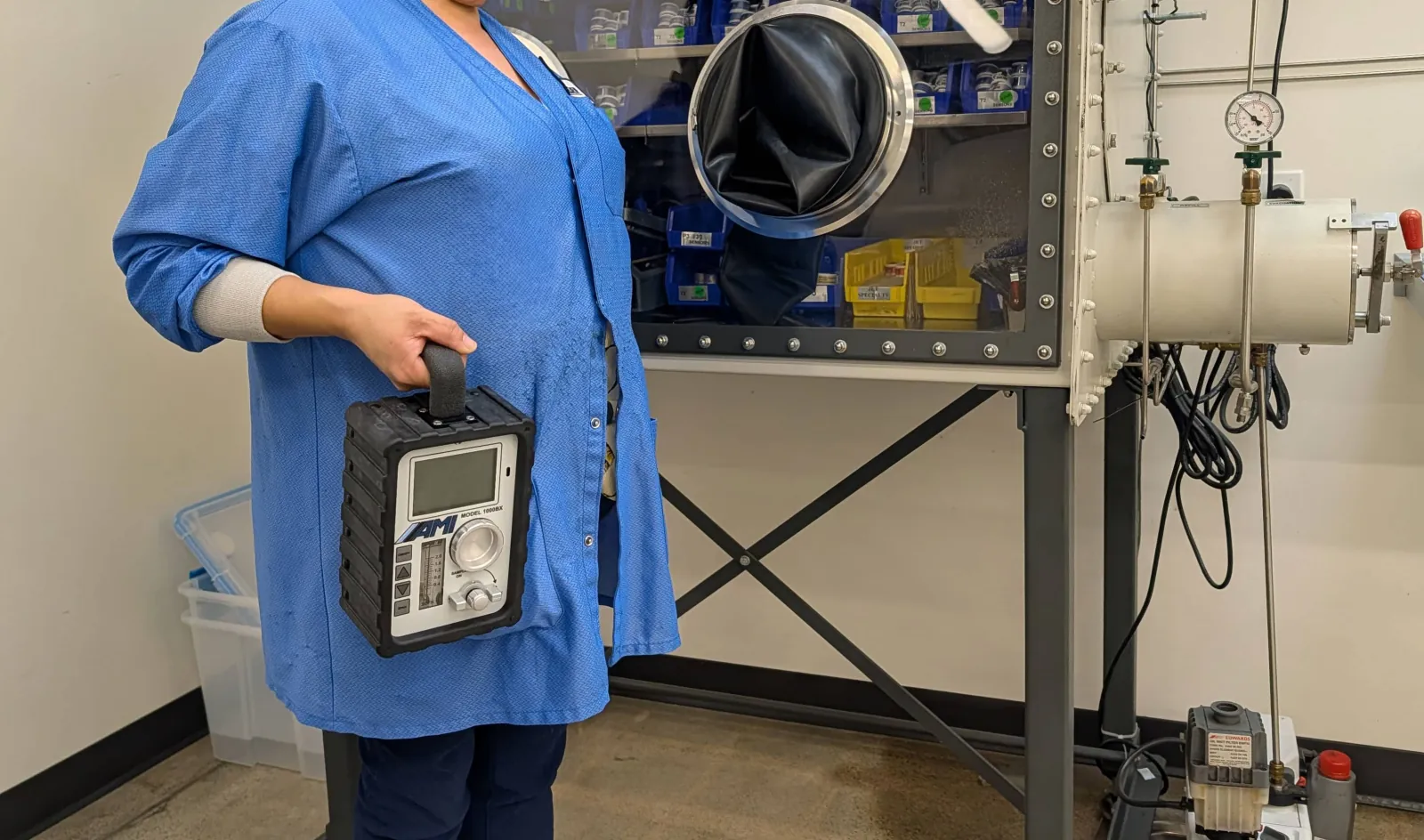
Many controlled-atmosphere systems depend on accurate oxygen monitoring, including:
- Inert-atmosphere glove boxes
- Anaerobic chambers
- Containment isolators
- Controlled-atmosphere process chambers
- Metal Additive Manufacturing (3D Printing)
Each environment serves a different purpose, but all require verification that oxygen levels remain within acceptable operating limits.
Common Applications
Oxygen monitoring supports a wide range of industrial and scientific applications.
Battery Research and Manufacturing
Lithium and other sensitive battery materials must be protected from oxygen and moisture contamination to improve product performance and longevity.
Pharmaceutical and Chemical Synthesis
Controlled atmospheres help maintain product purity and reaction validity when handling air-sensitive compounds and catalysts.
Semiconductor and Electronics Manufacturing
Precision electronic components require protection from contamination and oxidation during production and assembly.
Anaerobic Microbiology
Oxygen-free environments enable cultivation and study of oxygen-sensitive organisms used in research and diagnostics.
Metal Additive Manufacturing and 3D Printing
Metal additive manufacturing processes using reactive powders such as titanium and aluminum depend on controlled atmospheric conditions. Accurate oxygen monitoring helps limit oxidation, protect material integrity, and support consistent production quality.
Explore industry detail in Applications for Oxygen Monitoring in Glove Boxes and Controlled Environments.
Process Control Versus Personnel Safety
Process oxygen monitoring and personnel safety monitoring serve different purposes.
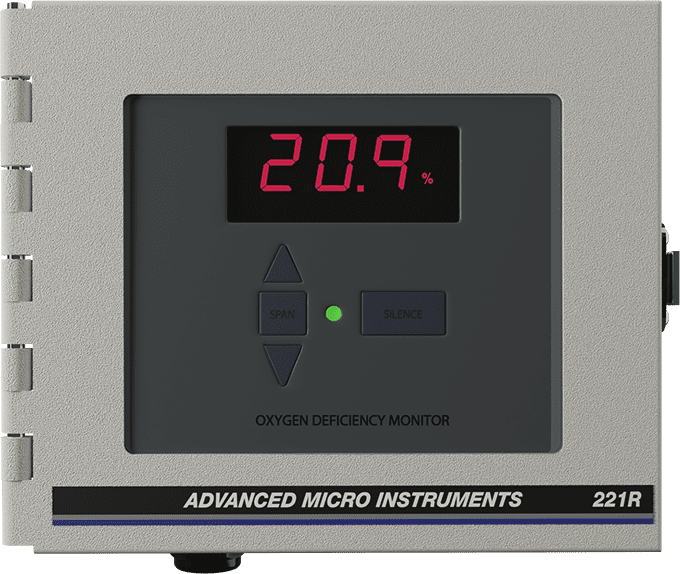
AMI oxygen analyzers monitor the atmosphere inside glove boxes and controlled environments to support process control. If a room surrounding a glovebox could become oxygen deficient, a dedicated oxygen deficiency monitor should be installed for personnel protection and OSHA compliance.
AMI recommends the Model 221R O2 Deficiency Monitor for room safety monitoring applications. A process analyzer inside the box does not satisfy OSHA room-monitoring requirements. Read OSHA Requirements for Oxygen-Deficient Environments.
Guides to Glove Boxes and Controlled-Environment Monitoring
Use these pages to go deeper on definitions, system selection, monitoring practice, OSHA room safety, and industry applications.
What Is a Glove Box?
Definition, core components, and why controlled atmospheres matter.
Glove Box vs Anaerobic Chamber
Key differences in atmosphere, applications, and oxygen monitoring.
Why Oxygen Monitoring Matters
Process integrity, ppm-level risk, and monitoring best practices.
OSHA Requirements for Oxygen-Deficient Environments
Room safety vs process monitoring, and when the Model 221R is required.
Applications for Oxygen Monitoring
Battery, pharma, semiconductor, anaerobic microbiology, and metal AM.
Frequently Asked Questions
Q: What is the difference between a glove box and an anaerobic chamber?
A: A glove box is designed for general containment and atmosphere control, while an anaerobic chamber is specifically designed to maintain a strict oxygen-free environment for anaerobic organisms. See the full comparison in Glove Box vs Anaerobic Chamber.
Q: How do AMI analyzers monitor glove box environments?
A: AMI analyzers continuously measure oxygen levels from above 20% down to low ppm concentrations using proprietary electrochemical sensor technology. They provide real-time monitoring, alarms, and rapid response times.
Q: How do you monitor a controlled environment effectively?
A: Organizations should define oxygen targets, select appropriate sensor technology, strategically place sensors, implement continuous monitoring, establish alarms, and maintain calibration and data logging programs.
Why Choose AMI
Glove box technology plays a critical role in pharmaceutical manufacturing, battery production, electronics processing, hazardous material handling, and scientific research. Maintaining precise atmospheric conditions helps prevent material degradation, improve process reliability, and protect personnel.
AMI is an industry leader in oxygen monitoring, offering both permanent and portable analyzer solutions for controlled-environment applications. With advanced technology, reliable performance, and strong customer support, AMI helps organizations maintain process integrity while meeting operational and quality objectives.
Explore AMI’s oxygen analyzer solutions or speak with a specialist to identify the best monitoring approach for your controlled-environment application.


