

Why Oxygen Monitoring Is Application-Dependent
Not all controlled environments have the same oxygen requirements. The acceptable oxygen concentration for a lithium battery research glove box differs significantly from that of an anaerobic microbiology chamber or a containment isolator.
For this reason, oxygen monitoring systems must be selected based on the specific process, atmosphere requirements, and operational objectives of the application. Continuous oxygen measurement helps maintain process integrity, support safety objectives, and verify that controlled environments remain within specification.
Industry Applications

Battery Research and Manufacturing
Battery research and manufacturing rely heavily on controlled environments to protect lithium and other highly sensitive electrode and electrolyte materials from oxygen and moisture contamination.
Exposure to oxygen can negatively impact performance, longevity, and product safety. Maintaining ultra-low oxygen concentrations is often critical throughout research, development, and production processes.

Pharmaceutical and Chemical Synthesis
Pharmaceutical manufacturing and chemical synthesis frequently involve air-sensitive compounds and catalysts that require carefully controlled atmospheric conditions.
Controlled environments help maintain product purity, reaction validity, consistency, safety, and efficacy while minimizing contamination risks.

Semiconductor and Electronics Manufacturing
Semiconductor production requires highly controlled manufacturing environments where contamination and oxidation can compromise sensitive materials and components.
Controlled atmospheres help protect electronic parts during manufacturing, assembly, packaging, and testing while supporting precision production requirements.

Anaerobic Microbiology
Anaerobic microbiology depends on oxygen-free environments for cultivating and studying oxygen-sensitive microorganisms.
These organisms support research, clinical diagnostics, biotechnology applications, waste management initiatives, and methane production. Strict atmospheric control is necessary to maintain organism viability and ensure reliable results.

Metal Additive Manufacturing
Metal additive manufacturing, including 3D printing, frequently uses reactive metal powders such as titanium and aluminum.
Exposure to oxygen can result in oxidation that negatively affects structural integrity and final part quality. Controlled atmospheres help manufacturers produce stronger, more consistent, defect-free components.
Controlled Environment Systems That Require Oxygen Monitoring
Anaerobic Chambers
Anaerobic chambers create oxygen-free environments for biological and microbiological applications. These systems typically operate using nitrogen, carbon dioxide, and hydrogen gas mixtures and require continuous oxygen verification to ensure proper conditions are maintained.
Common applications include microbiology research, clinical diagnostics, and anaerobic bacteria cultivation.
Glove Box Isolators
Glove box isolators allow operators to safely handle hazardous or air-sensitive materials while maintaining atmospheric separation from the surrounding environment.
Applications include chemical laboratories, pharmaceutical manufacturing, battery development, and materials science research.
Containment Isolators
Negative-pressure containment isolators protect operators and surrounding environments from hazardous substances.
These systems are commonly used in hazardous drug compounding, toxic material handling, and biohazard research. Oxygen monitoring can support inert-gas purge procedures and process control requirements.
Controlled Atmosphere Chambers
Controlled atmosphere chambers maintain customized gas mixtures designed for specific industrial processes.
Examples include Ar/CO2 atmospheres used in welding and N2/H2 atmospheres used in brazing. Common applications include aerospace welding, specialty chemical production, and historical artifact preservation.
Portable and Specialty Controlled Environments
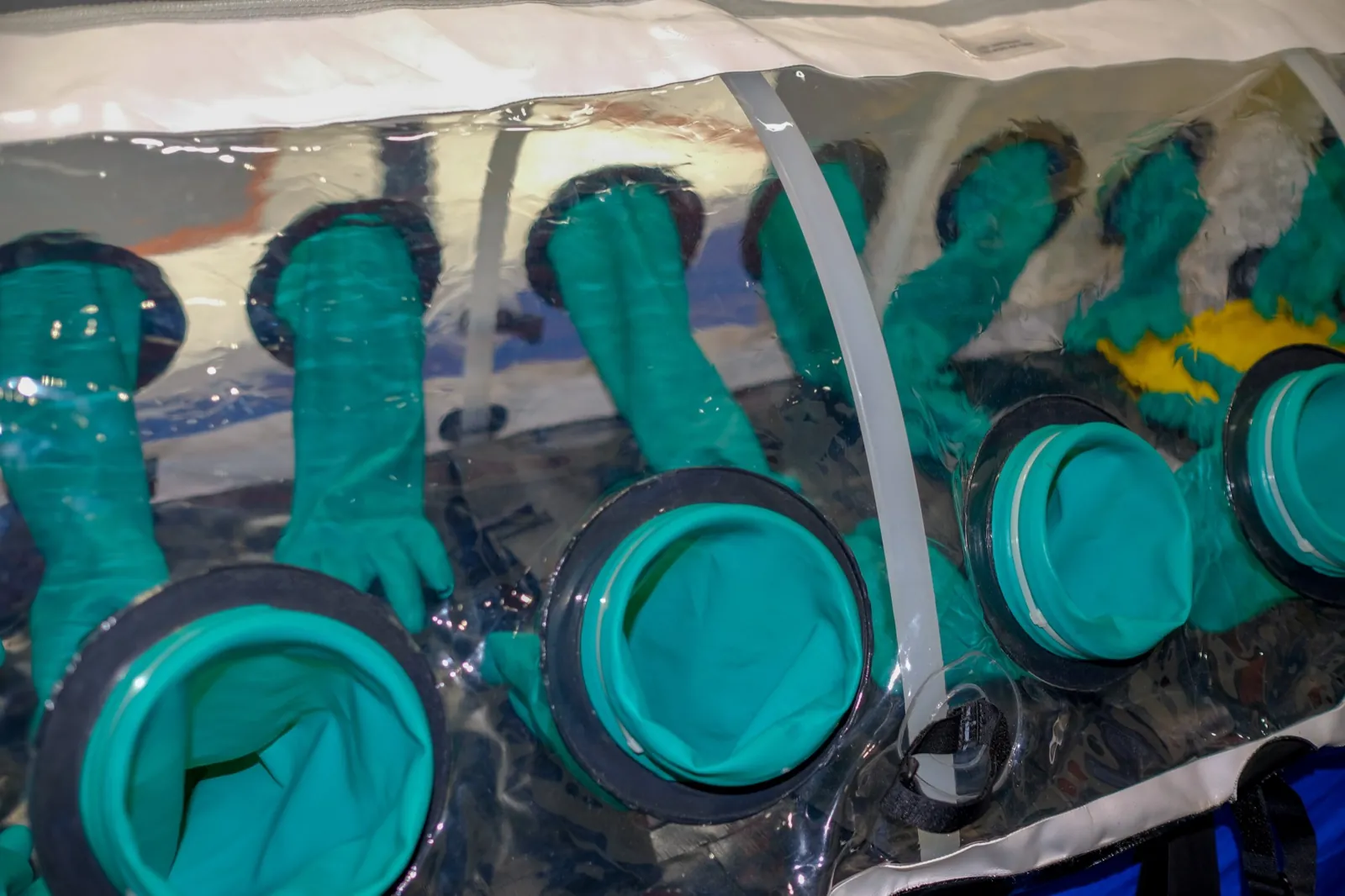
Controlled-atmosphere technologies extend beyond traditional glove boxes.
Examples include:
- Welding glove boxes
- Portable glove boxes
- Positive-pressure systems
- Negative-pressure systems
- Clean rooms
- Purge boxes
Each solution is designed to support specific atmospheric control objectives while protecting people, products, or processes.
Supporting Accessories and Environmental Controls
A variety of supporting technologies help maintain controlled atmospheres, including:
- Oxygen sensors
- Moisture sensors
- Gas purifiers
- Airlocks
- Material transfer systems
- Filters
- Ventilation systems
- High-dexterity gloves
Together, these components improve safety, environmental stability, and operational performance.
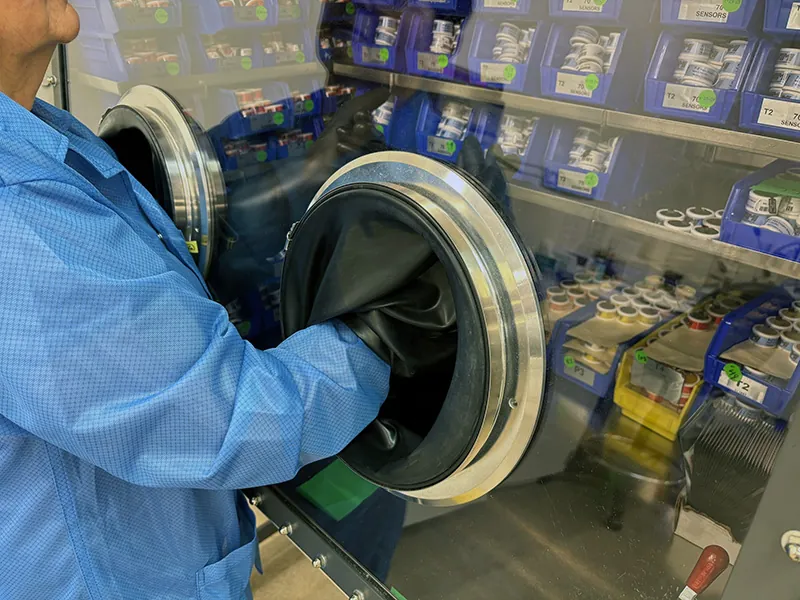
Customized Controlled Environments
Some applications require customized atmospheric solutions beyond standard glove box designs.
Examples include:
Ultra-Low Oxygen Inert Glove Boxes
Featuring closed-loop gas purification, oxygen and moisture sensors, positive pressure, and automated purge and regeneration capabilities.
Anaerobic Biological Chambers
Featuring oxygen-free gas mixtures, HEPA filtration, and integrated incubators.
Hazard Containment Isolators
Featuring negative pressure, continuous monitoring, double HEPA exhaust systems, and fail-safe containment.
Product and Personnel Protection Systems
Featuring inert atmospheres, slightly negative pressure, interlocked access controls, and integrated alarm systems.
Find the Right Oxygen Analyzer for Your Application
Different controlled-environment applications require different oxygen monitoring strategies. From battery manufacturing and semiconductor production to pharmaceutical processing and anaerobic microbiology, maintaining the proper atmosphere is essential for product quality, process reliability, and operational success. AMI offers a range of oxygen analyzers designed to support gloveboxes, anaerobic chambers, containment isolators, and other controlled-atmosphere systems across a wide variety of industries.
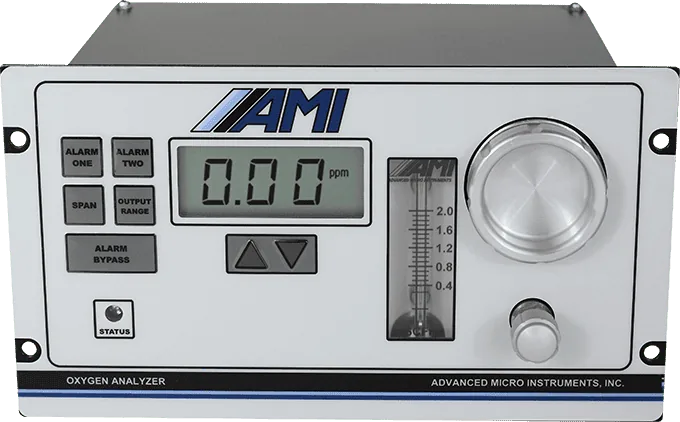
MODEL 2001RS/RSP
Trace oxygen analyzer for ultra-low ppm glove boxes in battery, semiconductor, and air-sensitive chemistry.
Features
- Eliminator Cell Block for fast, low-maintenance sensor service.
- Two fully adjustable concentration alarms.
- Analog and Modbus outputs for process control.
- Command Center software for configuration and data logging.
- AMI electrochemical sensors designed for labs and glove boxes.
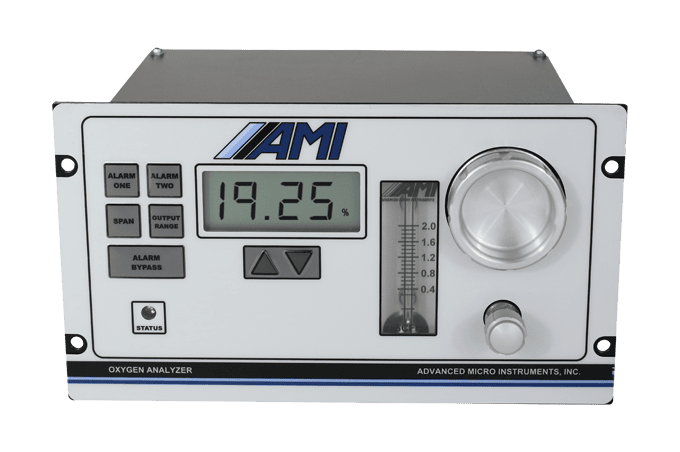
MODEL 201RS/RSP
Percent oxygen analog of the 2001 family for glove boxes and chambers that operate at percent-level setpoints.
Features
- Panel-mounted, virtually maintenance-free design.
- Eliminator Cell Block and fast response.
- Ideal for percent oxygen in general-purpose environments.
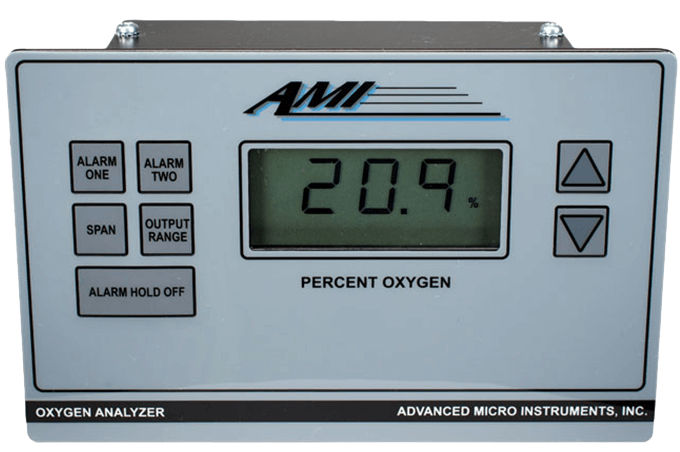
MODEL 70
Compact percent oxygen analyzer with two alarms, analog/Modbus, Command Center, a 10-year sensor, and annual calibration.
Features
- Two fully adjustable concentration alarms.
- Analog and Modbus outputs for process control.
- Command Center software for configuration and data logging.
- 10-year zirconium oxide sensor with annual calibration.
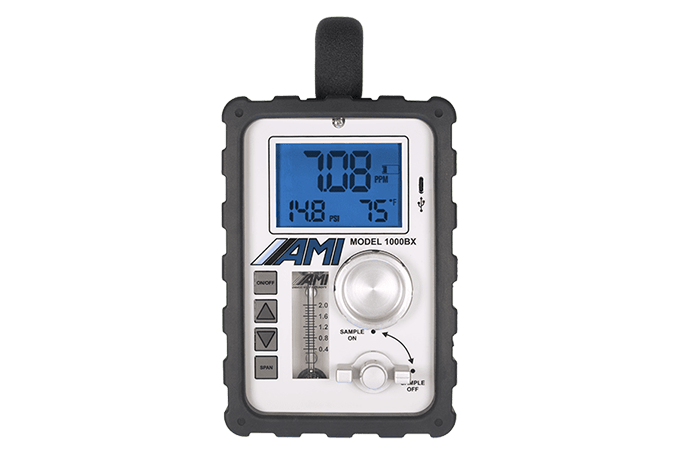
MODEL 1000BX
Portable trace and percent analyzer for multi-station glove box facilities, post-purge checks, and hazardous-area data logging.
Features
- Cost-effective deployment across multiple systems.
- Rapid validation after purging operations.
- Spot-check verification after glove port entries.
- Troubleshooting support with fast, reliable oxygen measurements.
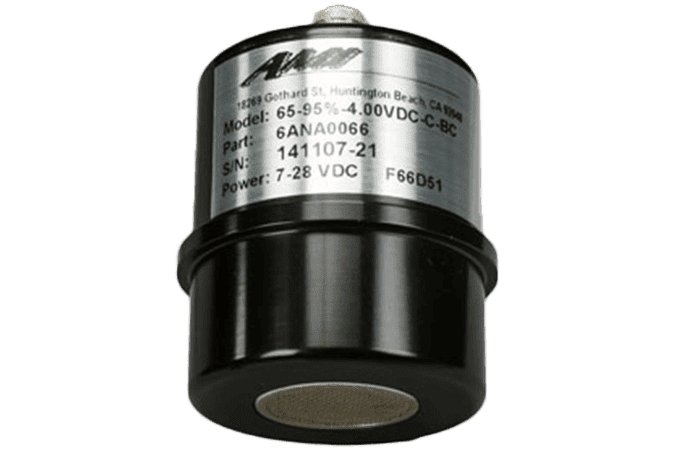
MODEL 65
Standalone zirconium oxide percent oxygen probe for OEM integration with analog 0-25/50/95% ranges and a 10-year sensor.
Features
- 10-year probe that is essentially maintenance-free.
- Standalone sensor for operator and OEM systems.
- Compact, rugged construction for inert-gas installations.
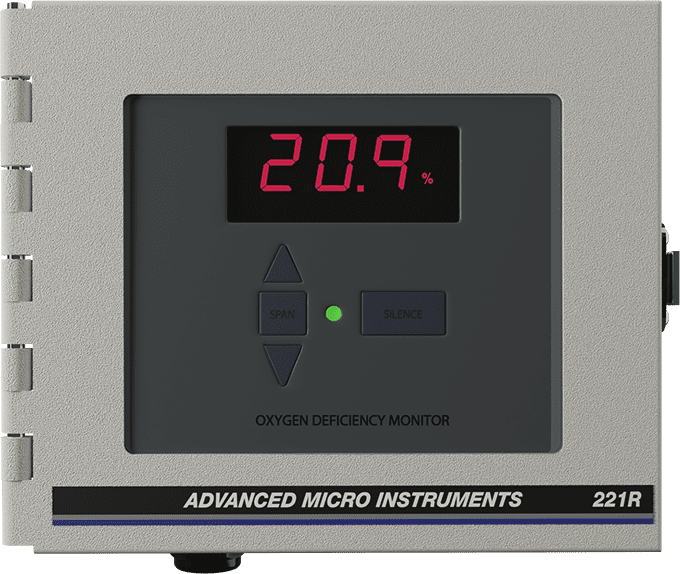
MODEL 221R
Room-safety oxygen deficiency monitor for occupied spaces around glove boxes. Battery backup, 95 dB alarm, 10-year ZrO2 sensor, optional remote probe. Not for flammable gases. Does not replace in-box process analyzers.
Features
- Battery backup and tamper-resistant alarm setpoints.
- Powder-coated enclosure for industrial environments.
- 95 dB alarm with optional beacons and exhaust-fan interlocks.
- 10-year ZrO2 sensor with optional remote probe.


