

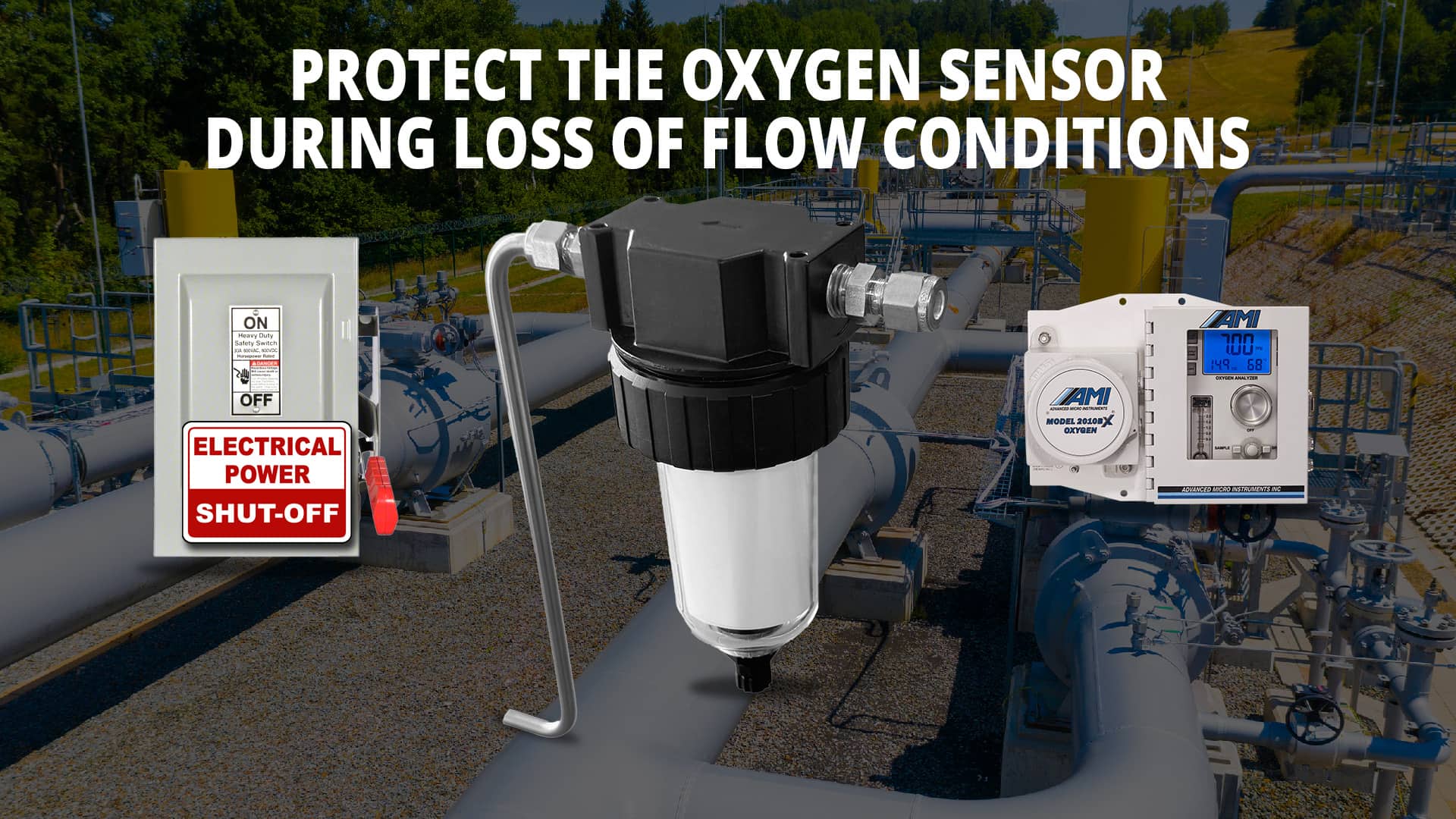
AMI oxygen analyzers are designed to vent to atmosphere. That works well while sample gas is flowing—but during no-flow conditions, oxygen from ambient air can migrate back through the vent line and reach the sensor.
Why this matters: when gas flow stops, air can backflow to the sensor
When gas is flowing through the analyzer, positive pressure in the vent line prevents air from moving back into the analyzer. But when gas flow stops, that protection goes away—and ambient air can diffuse back through the vent line. Because air is ~20.9% oxygen, repeated or extended exposure can consume the usable life of the oxygen sensor much faster than expected.
A simple fix: install an AMI Back Diffusion Assembly
Installing an AMI Back Diffusion Assembly on the vent line adds a liquid barrier between the analyzer and the atmosphere, preventing oxygen in air from reaching the sensor when gas flow is lost. Glycol is the recommended liquid because of its low freezing point. Under normal flow, the assembly adds negligible back pressure and does not impact analyzer performance.
When should you add one?
If your installation often sees power losses, process upsets, or other shutdowns that stop sample flow, the sensor may be exposed to air each time gas flow drops to zero. Adding a Back Diffusion Assembly helps protect the sensor from avoidable exposure and premature depletion.
Compatible analyzers
Next step
If your installation would benefit with the installation of an AMI Back Diffusion Assembly, contact your local AMI distributor or AMI directly for more information and to place an order. Product information and data sheet are available on the AMI website at www.amio2.com.


